Delivering Green Guest Entertainment – International Day of Forests
International Day of Forests
In hospitality, small operational choices can have a lasting environmental impact.
Printed menus replaced regularly, stacks of newspapers refreshed each day, and information leaflets that quickly become outdated all contribute to the amount of paper used and wasted across hotels, lounges, and waiting areas.
While each individual item may seem minor, the combined effect across multiple venues and thousands of guests can be significant. In the UK alone, around 12.5 million tonnes of paper and cardboard are used every year, with a large proportion eventually becoming waste.
As the International Day of Forests approaches, many businesses are reflecting on how everyday practices can become more environmentally responsible. For hospitality venues, this includes how they provide entertainment, information, and reading materials to guests.
Digital solutions are increasingly helping businesses reduce their environmental footprint while maintaining the quality of the guest experience.
Understanding the wider impact of paper use
Globally, paper production has a considerable environmental footprint. Around 405 million tonnes of paper and paperboard are produced each year, and the pulp and paper industry accounts for around 13–15% of global wood consumption.
Forests play a vital role in absorbing carbon, protecting biodiversity, and maintaining ecosystems, which is why reducing unnecessary paper use has become an important part of sustainability discussions across many industries.
For hospitality businesses that welcome both international and local guests every day, reviewing how printed materials are used is a practical place to begin making small but meaningful changes.
Rethinking how guests access content
Guests today typically travel with their own devices, whether smartphones, tablets, or laptops. These devices have become a natural way for people to access information, entertainment, and services during their stay.
Providing content through guests’ own devices allows venues to offer a wide range of reading materials, puzzles, podcasts, and newspapers without relying on large quantities of printed material.
Instead of regularly replacing stacks of paper, businesses can offer the same variety of content digitally while significantly reducing physical waste. This approach supports both guest convenience and environmental responsibility.
Reducing paper across multiple touchpoints
Entertainment is not the only area where digital platforms can reduce paper use. In many hospitality settings, printed materials are also used for guest information and services.
This can include:
in-room food and drink menus
printed guest guides
promotional leaflets
local recommendation booklets
Digital platforms allow these resources to be accessed directly through a guest’s device, removing the need for constant reprinting whenever updates are required.
For venues that regularly change menus, services, or seasonal offers, this flexibility can significantly reduce paper waste over time.
Supporting sustainability without adding operational pressure
Introducing new guest services can sometimes require additional equipment, storage space, or staff time to manage them. Digital platforms remove many of these barriers.
Because content is accessed through guests’ own devices, there is no need for physical storage or distribution of materials. Staff do not need to replenish magazines or replace printed information, and updates can be made easily without disrupting daily operations.
This allows hospitality businesses to improve guest engagement while keeping operations simple.
A digital solution for hospitality
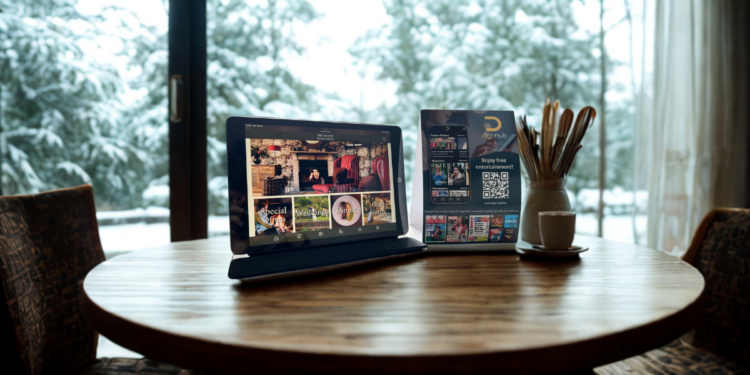
Digi-Hub allows hospitality venues to provide a wide range of digital entertainment and information through a single platform – replacing the need for paper material across different needs.
Guests can access magazines, newspapers, puzzles, podcasts, and other content directly from their own devices using QR codes or simple links. The platform can also host food menus, promotional content, and venue information, helping businesses reduce reliance on printed materials.
By offering content digitally, venues can continue to entertain guests while taking steps to reduce paper consumption.
Find out how you can improve your guests’ experience while putting sustainability first by visiting Digi-Hub: https://digi-hub.media
A simple takeaway for hospitality businesses
Hospitality businesses are increasingly looking for ways to balance guest experience with environmental responsibility.
Digital platforms provide a practical way to deliver entertainment and information without relying on large quantities of printed materials.
As the International Day of Forests highlights the importance of protecting natural resources, reviewing how content is delivered within guest spaces can be a simple but meaningful step toward more sustainable operations.
Sometimes the most effective improvements are the ones that quietly support both the guest experience and the environment at the same time.
This website uses cookies so that we can provide you with the best user experience possible. Cookie information is stored in your browser and performs functions such as recognising you when you return to our website and helping our team to understand which sections of the website you find most interesting and useful.
Strictly Necessary Cookies
Strictly Necessary Cookie should be enabled at all times so that we can save your preferences for cookie settings.
If you disable this cookie, we will not be able to save your preferences. This means that every time you visit this website you will need to enable or disable cookies again.
3rd Party Cookies
This website uses Google Analytics to collect anonymous information such as the number of visitors to the site, and the most popular pages.
Keeping this cookie enabled helps us to improve our website.
Please enable Strictly Necessary Cookies first so that we can save your preferences!